'Field Guide to the Offa's Dyke', Tulca Festival 2025, Galway
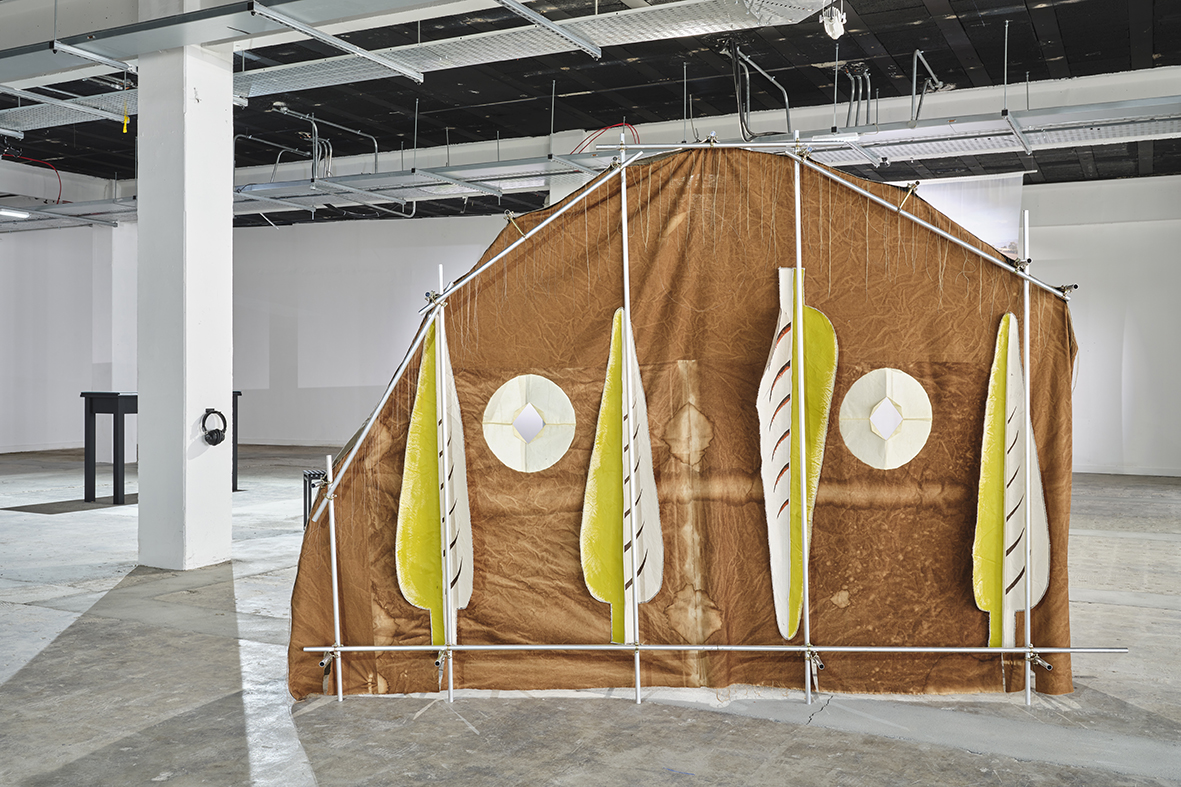
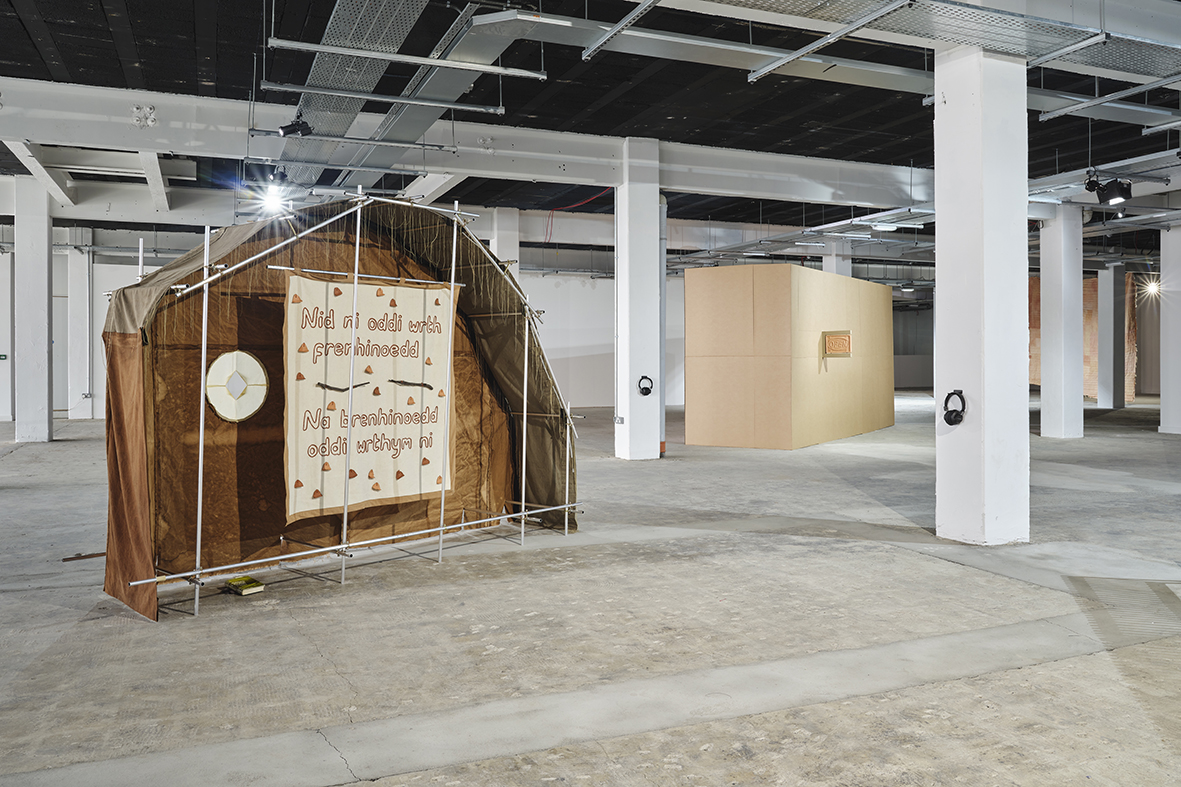
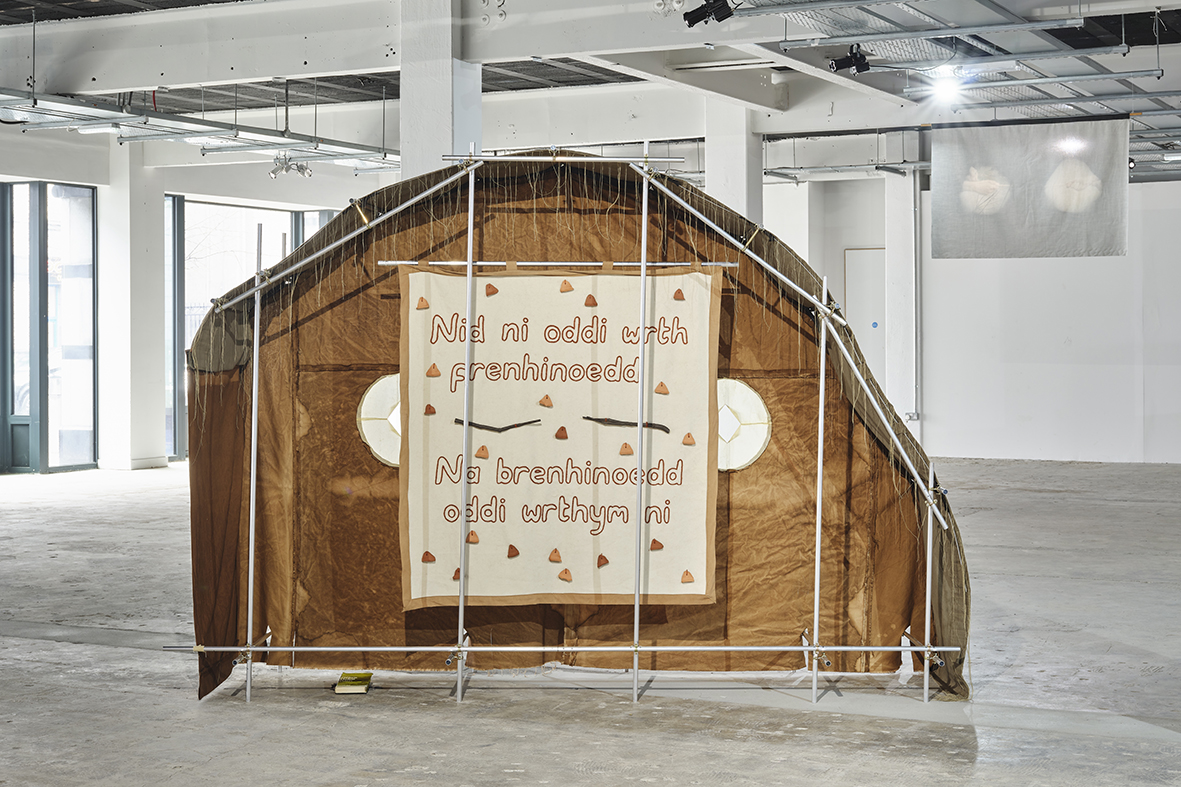
Medium: dyed waxed canvas, aluminium tubing, metal fixings, hand-stitched wool blanket, printed textile banner, ceramic details, pewter cast bracken fronds
The audio piece can be found here: https://www.tulca.ie/podcast/2025/11/21
‘A Field Guide to the Offa’s Dyke’ explores the psychogeography of the dyke as a personal as well as national border, imagining the Welsh borderlands and dual identity as a space of creative potential. It is an ancient border but a tangible one, removed from the current political frontier although not entirely dormant. It seems to allow more space for exploration of alternative narratives and histories than the current borderline might.
Visits to sites on the Offa’s dyke in Mid and South Wales informed the audio piece, which touches on the uneven experience of Welsh-English identity. I was thinking about small borders such as the Leilandii cyprus hedges we erect on the edges of our property, as well as national borders and the internal shifts between different parts of our identity. I found out through reading Mike Parker’s book 'All The Wide Border' that this hybrid plant was invented in Mid Wales, very near to the Offa’s dyke, at Leighton Hall near Welshpool.
At the same time that I was exploring sites on the Offa’s dyke, I had become interested in an inscription on a building in Mid Wales inhabited by relatives of mine as tenant farmers in the 1920s. An inscription on the front of the farmhouse reads ‘Not We From Kings, But From Us Kings’. A rejection of monarchy was probably the intended meaning of the slogan, however there was an ambiguity to the language and I decided to make a new version that more directly questioned loyalty to kings, nationhood and borders. The new version, in Welsh, reads ‘Nid ni oddi wrth frenhinoedd, na brenhinoedd oddi wrthym ni’, or ‘Not We From Kings, Nor From Us Kings’.
The shape of the piece draws on the form of Offa’s dyke; the Dyke was constructed in an uneven shape, with the bank much higher on the Welsh side, to allow long views into the Welsh landscape. When I read about this and saw examples of it in the archaeology report I felt a funny feeling, it seemed to manifest the idea of one side of my identity looking in on the other.
This piece was commissioned by Tulca festival as part of a project titled 'Borderlands/Y Gororau' where I invited artist Emily Joy and artist/writer Durre Shahwar to join me in responding to sites along the Offa’s dyke.